Start with the condition beneath the finish
A karting track surface project should begin with an assessment of the existing base. Identify whether the substrate is concrete, asphalt or another part of the track construction. Record previous coatings, repairs, contamination, cracks, joints and areas of wear. A surface that looks uniform in a photograph may need several different preparation activities.
Explain the operating history as well as the visible condition. Previous cleaning products, oil contamination, water exposure and earlier repairs can affect the proposed work. A coating is a finish applied to a prepared substrate; it should not be treated as a substitute for necessary structural or substrate repairs. The first quotation should clearly distinguish preparation, repairs and the selected coating system.
Define what the surface needs to do
The specification should consider the intended karts, operating environment, maintenance approach and appearance. Discuss the driving surface separately from customer walkways, pits and workshop areas, because the conditions and requirements may differ. Avoid assuming that a general industrial floor coating is automatically suitable for the complete circuit.
MRK Water-Based Epoxy Coating is presented by MRK as a two-component, water-based epoxy coating for karting circuits on concrete and asphalt. Use the current technical data sheet and safety data sheet when assessing suitability. Product selection, substrate preparation, application and return to service should form one agreed system rather than separate decisions made by different contractors.
Specify preparation instead of writing “clean the floor”
Preparation needs a defined method and acceptance criteria. FeRFA's published guidance explains that the method should be selected for the substrate and chosen resin system. Existing coatings, contamination, access and the equipment available can all affect that choice. Discuss the required surface profile with the coating supplier and specialist contractor rather than assuming that a more aggressive treatment is always better.
The site plan should show how prepared areas will be protected from new contamination before coating. Coordinate dust management, adjacent activities and the movement of people or equipment. Include the treatment of edges, joints and repairs in the scope. Recording the condition before and after preparation gives the project a useful reference when deciding whether application may proceed.
Check moisture and application conditions
A dry-looking surface does not establish that all relevant moisture conditions have been evaluated. ICRI's guidance on concrete floor slabs addresses moisture issues, testing, interpretation and mitigation. The project team should agree appropriate testing with the coating supplier and interpret the results against the selected system's requirements.
Record the environmental and substrate conditions required by the current product instructions. Those conditions can affect the programme as well as the application decision. A venue that remains open nearby, has restricted access to utilities or is exposed to changing weather may need additional planning. Do not replace the selected product's limits with a general rule taken from another resin system or a different test method.
Measure the coated area and compare complete prices
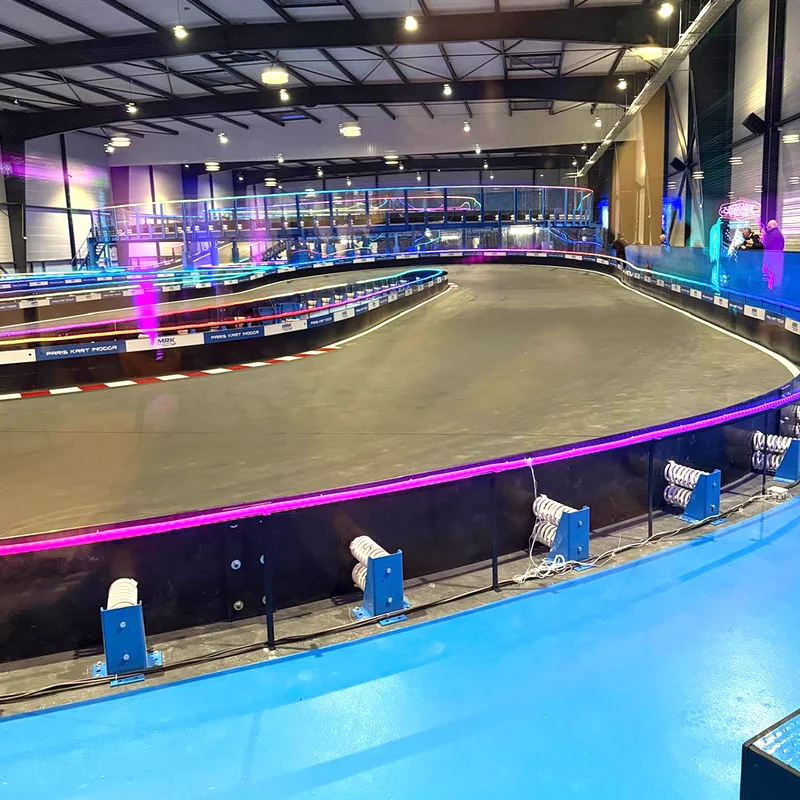
Measure the actual surface included in the coating work. The gross building area may include reception, offices and other spaces receiving a different finish. An elevated circuit may have additional driving surface that is not represented by its ground footprint. Mark included and excluded areas on the plan so quantities can be checked.
| Budget component | Clarification to request |
|---|---|
| Preparation | Method, existing finish removal and access restrictions |
| Repairs | Defined treatment of identified substrate defects |
| Coating | Specified system, area and application scope |
| Programme | Protection, inspection and return-to-service conditions |
A price per square metre is only comparable when those responsibilities and conditions match.
Plan application and reopening as separate decisions
Agree who checks the materials, conditions, preparation and application records. The contractor should follow the current mixing, application and handling instructions for the selected product. Any sample or trial area should be reviewed for the purpose agreed with the supplier, including the expected appearance and the relevant operating requirements.
Drying stages described in product literature are not automatically the same as permission to resume karting. Confirm return-to-service requirements for the actual installation and planned traffic. Coordinate the surface programme with the barrier system and other equipment so subsequent work does not damage the finish. This is part of the wider track construction or renovation plan.
Prepare a maintenance plan from the start
Agree suitable cleaning products, equipment and inspection routines with the system supplier. Keep records of wear, damage, contamination and local repairs so recurring issues can be investigated rather than repeatedly covered over. The maintenance team should know which work it may undertake and when it should seek specialist advice.
For a renovation enquiry, provide the substrate, measured area, photographs, existing finish information and available closure period. Explain whether the work covers a local repair, a full circuit or an associated operating area. Ask MRK about your track surface with that information to establish the next assessment and quotation stage.
Questions before the next step
Can epoxy coating be applied directly over an old karting track finish?
The existing finish and underlying substrate need assessment. Compatibility, adhesion, contamination and preparation requirements should be established for the selected system before deciding whether an existing coating can remain.
How soon can karts return after a surface coating?
Use the return-to-service requirements confirmed for the actual product, substrate and application conditions. A dust-free or drying time quoted in a technical sheet is not necessarily a reopening time.
How much coating will my circuit need?
Start with the measured coated area and the application requirements of the current technical sheet. Substrate texture, preparation, system build-up and application conditions can affect quantities; confirm the project allowance with MRK.
Sources & further reading
- MRK — Water-Based Epoxy Coating product information and technical sheet
- FeRFA — surface preparation guidance
- ICRI 710.3-2022 — published scope of moisture guidance for concrete floor slabs
Source pages checked on 6 November 2026. Published standards overviews describe scope; the applicable edition and project requirements need to be established for the venue.