Start with the customer you can realistically serve
A karting business starts with a commercial question: who will visit, why will they choose this venue, and when will they come back? A visually impressive circuit helps create an experience, but it does not replace a credible local demand model. Define the core audience before choosing the building or fleet: adult leisure drivers, families, organised groups, corporate events or a combination with clearly separated products.
Map the catchment by actual travel time. Study competing attractions as well as other circuits, because customers may be deciding between karting, bowling, a cinema or another group activity. Speak with prospective customers and event organisers, and record what they would actually book. Treat enthusiastic comments as research input rather than confirmed sales.
The GOV.UK business-plan guide is a useful starting point for structuring objectives, sales and financial forecasts. Your karting plan then needs venue-specific operating detail.
Test the premises before committing to the layout
A warehouse floor area is only the beginning of a venue assessment. Record columns, clear height, access routes, existing services, floor condition, exits and the areas needed for customers and staff. Include reception, briefing, changing or equipment distribution, pit operations, maintenance, storage and any hospitality offer in the space schedule.
For scale, a 3,000 m² building is approximately 32,292 ft². That is gross building area, not an automatic allocation of 3,000 m² to the driving surface. Circulation and support functions must remain workable during a full event, not only when the venue is empty.
Before signing an unconditional lease or purchase agreement, ask the relevant local advisers to assess permitted use, building requirements, utility capacity and approval dependencies. The exact requirements vary by location and project.
Write a track brief that supports the business model
Share a measured plan with the track team and explain the intended experience. Is the priority an accessible first visit, a technical lap for returning customers, elevated sections, group visibility or a flexible entertainment venue? These choices influence the go-kart track design and the interface between the circuit and customer areas.
A useful early brief contains the following decisions:
- Intended customer groups and the proposed range of sessions.
- Indoor, outdoor or mixed setting, with a clear fleet strategy.
- Available plan dimensions, heights and known building constraints.
- Operating hours, event ambitions and expected staffing responsibilities.
- Budget boundaries, target opening period and approval milestones.
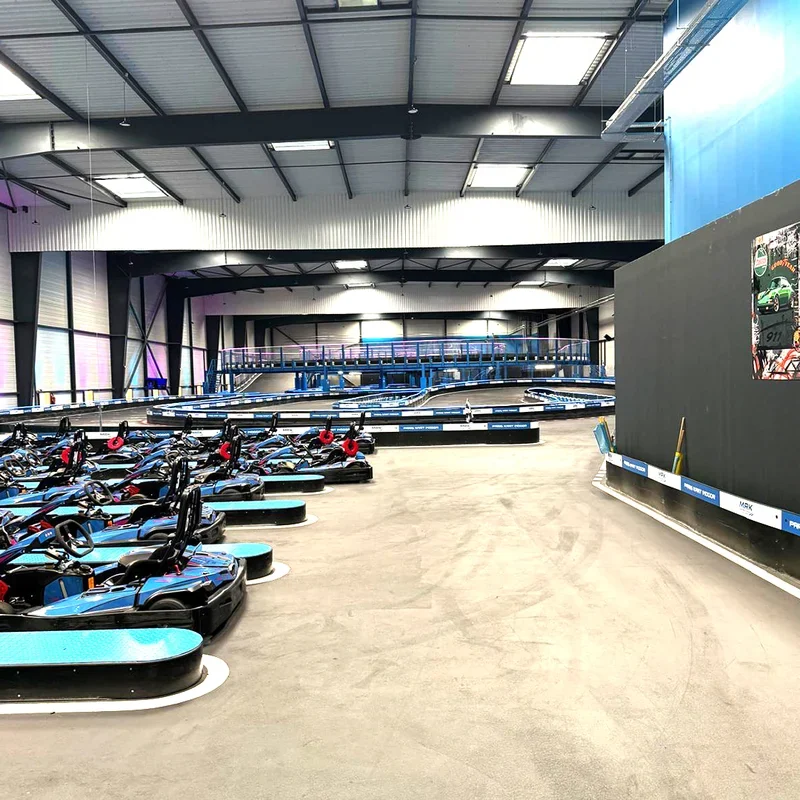
If the concept includes multi-level karting tracks, assess the structure, building interface and operating access as part of the concept, before treating extra track length as a finished benefit.
Separate the track package from the complete opening budget
Request a written scope for every quotation. The track package may include design, selected structures, barriers, surface works or installation, but the quotation must state what is actually included. The full venue investment can also contain building works, the fleet, charging or fuel infrastructure, booking and timing equipment, reception, professional fees and launch costs.
| Budget group | Question to answer |
|---|---|
| Track and technical works | What is supplied, installed and commissioned? |
| Building and utilities | Which modifications are required before installation? |
| Fleet and operating equipment | What supports the chosen session plan? |
| Opening and cash reserve | What funds the period before trading stabilises? |
The SBA planning resources distinguish startup spending from ongoing expenses. Apply that distinction to your actual supplier scopes instead of assuming that one circuit price covers an entire centre.
Build the operating forecast before ordering equipment
Model paid rides, not simply the number of visitors entering the building. A guest buying two races creates two rides, while a spectator may create no track revenue. Work out the proposed timetable, changeover process, fleet availability and the share of capacity that you expect to sell in each time period.
Separate weekday walk-in demand, weekend demand and organised events. Use a cautious opening scenario and show what happens if the ramp-up takes longer, an event cancels or a significant cost rises. Cash planning should include supplier payment dates, deposits received from customers, taxes and financing payments where applicable.
Use the karting investment and break-even guide to connect these assumptions to contribution per ride. A forecast is a decision model to update, not a promise that the venue will achieve its target.
Give every opening dependency an owner
Define who owns the building works, local approvals, track supply, installation access, utilities, fleet delivery, recruitment, systems setup and operational training. Put the interfaces on one programme. For example, a planned track installation date is vulnerable if the site is not ready for unloading or if the specified floor preparation has not been completed.
Keep a decision register with the question, responsible person, due date and effect on cost or programme. This makes late changes visible and prevents an aesthetic decision from quietly changing a structural or operational assumption. For international projects, include shipping, customs responsibilities, local installation resources and the documentation needed for handover.
A controlled soft opening can then test bookings, briefing, equipment distribution and customer flow against the agreed operating procedures before the venue increases its sales commitments.
Prepare a useful first discussion with MRK
Bring the available building plan, photographs, country and city, intended customer offer, preliminary budget scope and target opening period. Highlight what is confirmed and what is still being investigated. A clear list of unknowns is more useful than a precise drawing built on uncertain dimensions.
MRK can discuss the relationship between your space and a proposed circuit through the project enquiry form. The next step should produce specific decisions about survey information, concept options and quotation scope, so that the business plan and the physical project develop together.
Questions before the next step
Do I need a business plan before asking for a track concept?
An early concept can help test feasibility, but you should already identify the audience, venue constraints, investment boundaries and intended operating offer. These assumptions guide a useful first design discussion.
Is the track quotation the full cost of opening a karting centre?
Only if its written scope explicitly includes every item needed for the centre. Building works, karts, utilities, customer facilities, professional fees and operating cash often require separate budgets.
Sources & further reading
Source pages checked on 6 November 2026. Published standards overviews describe scope; the applicable edition and project requirements need to be established for the venue.